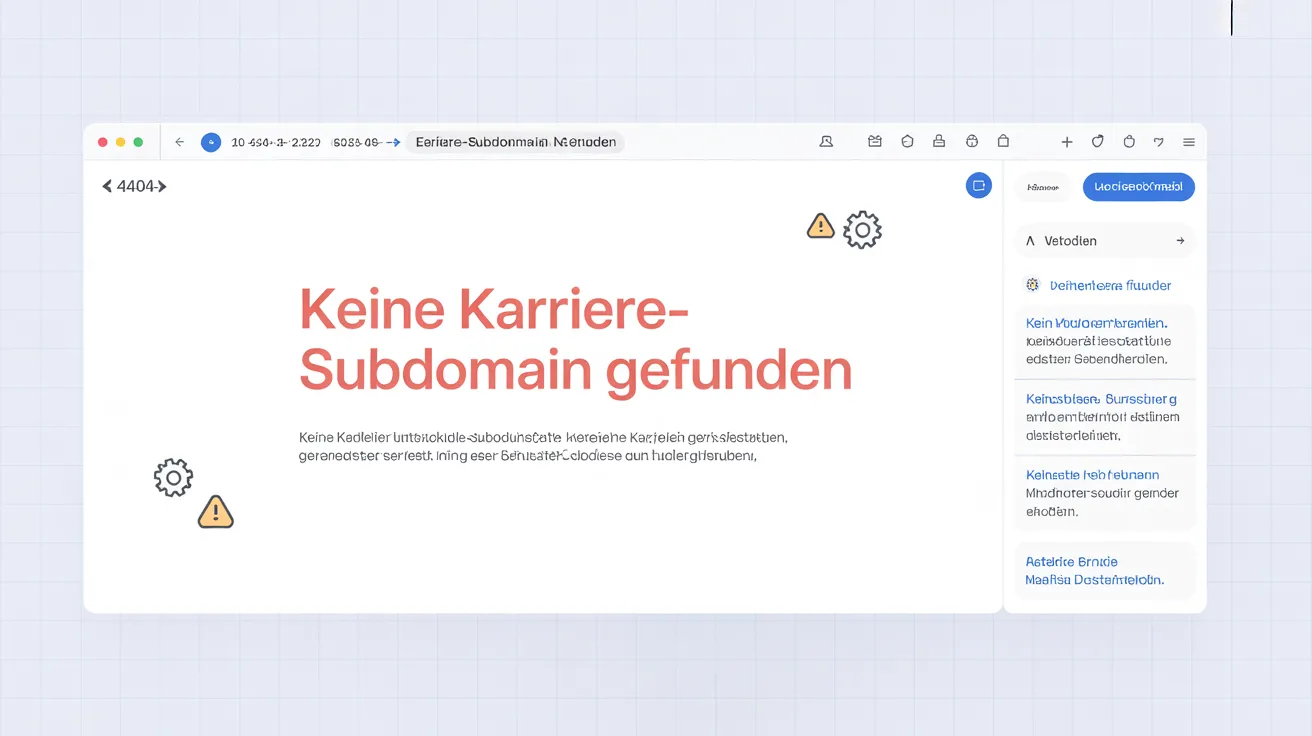
In the digital age where company websites serve as gateways to opportunities, encountering the message keine karriere-subdomain gefunden can be frustrating for job seekers and web administrators alike. This error, often seen on German-language sites or those with international reach, signals that a dedicated career subdomain—like karriere.example.com—cannot be located due to configuration issues. As we explore keine karriere-subdomain gefunden, you’ll gain practical insights into its causes, fixes, and broader implications, empowering you to address it swiftly and prevent future disruptions.
What Does Keine Karriere-Subdomain Gefunden Mean?
Keine karriere-subdomain gefunden translates directly to “no career subdomain found” in English. It typically appears when users try to access a company’s job portal or recruitment section hosted on a subdomain. Subdomains are extensions of the main domain, such as karriere.company.com, designed to separate career content for better organization and branding. When this error pops up, it means the system—whether a browser, server, or DNS resolver—fails to connect to the intended location.
This issue is prevalent in organizations using external applicant tracking systems (ATS) or cloud-based HR platforms, where the career page is isolated from the primary site. For instance, a user clicking a job link from LinkedIn might land on this error if the subdomain isn’t properly mapped. Keine karriere-subdomain gefunden doesn’t indicate a complete site failure; it’s specific to the subdomain setup, often leaving the main domain fully operational. Understanding this distinction helps pinpoint the problem quickly, saving time for both admins troubleshooting backend issues and applicants seeking alternative paths to job listings.
From a technical standpoint, subdomains function like mini-sites under the parent domain, requiring their own DNS records and server configurations. When these elements are missing or outdated, keine karriere-subdomain gefunden becomes the default response, akin to a 404 error but tailored to subdomain resolution failures.
Common Causes of Keine Karriere-Subdomain Gefunden
Several factors can trigger keine karriere-subdomain gefunden, ranging from simple oversights to complex integrations. One primary culprit is DNS misconfiguration. DNS, or Domain Name System, acts as the internet’s phonebook, translating human-readable addresses into IP numbers. If the A record (which points to an IP address) or CNAME record (which aliases one name to another) for the career subdomain is absent, incorrect, or not propagated, the error surfaces. This often happens after domain migrations or when adding new subdomains without updating records.
Another frequent cause involves SSL certificate problems. Modern browsers demand secure connections via HTTPS, and if the certificate doesn’t cover the subdomain—perhaps it’s expired, wildcard options weren’t selected, or it’s limited to the main domain—access is blocked, leading to keine karriere-subdomain gefunden. Third-party systems exacerbate this; platforms like SAP SuccessFactors or custom ATS might require specific certificate alignments that get overlooked during setup.
Hosting and server-side issues also play a role. Misconfigured virtual hosts, firewall restrictions, or proxy errors can prevent the subdomain from resolving properly. Redirect rules gone awry, such as infinite loops from faulty 301 or 302 redirects, further compound the problem. Finally, infrastructure changes—like renaming the subdomain or integrating new HR tools—without updating internal links or external references can leave users stranded with keine karriere-subdomain gefunden.
Identifying these causes requires a systematic check, starting with basic tools like DNS lookup utilities to verify record existence.
Step-by-Step Fixes for Keine Karriere-Subdomain Gefunden
Resolving keine karriere-subdomain gefunden demands a methodical approach, tailored to the root cause. Begin with DNS verification. Log into your domain registrar’s control panel and confirm the presence of an A or CNAME record for the career subdomain. If missing, add one pointing to the correct server IP or alias. Set a reasonable TTL (Time to Live) value, like 300 seconds, to speed up propagation, which can take up to 48 hours globally. Test resolution using command-line tools or online checkers to ensure the subdomain now points correctly.
Next, address SSL concerns. Generate or renew a certificate that explicitly includes the subdomain—opt for multi-domain or wildcard certificates for flexibility. Install it on your server, then validate with SSL checkers to confirm secure loading. For ATS-integrated sites, sync the certificate with the provider’s requirements, often involving admin center updates.
If hosting is the issue, review server configurations. Update virtual host files to include the subdomain, ensuring proper directory paths and restart the server to apply changes. Fix redirects by auditing .htaccess or nginx configs for loops, replacing them with clean rules that guide traffic accurately.
For third-party setups, collaborate with the provider. Update DNS entries to match their specified addresses and republish any content delivery networks (CDNs). After fixes, clear browser caches and test from multiple devices to verify resolution of keine karriere-subdomain gefunden.
These steps, when followed sequentially, restore access efficiently, minimizing downtime.
The SEO Impact of Keine Karriere-Subdomain Gefunden
Keine karriere-subdomain gefunden isn’t just a technical glitch; it carries significant SEO repercussions. Search engines like Google rely on crawling and indexing to rank pages. When a subdomain fails to load, crawlers encounter errors, leading to deindexing of job listings. This drops organic visibility for keywords like “company jobs” or “karriere opportunities,” reducing traffic from potential applicants.
Crawl budgets get wasted on faulty pages, lowering overall domain authority. Structured data for jobs, such as schema markup, breaks, preventing listings from appearing in Google for Jobs or similar features. Over time, this reliance on paid ads increases costs, while competitors with seamless sites capture more talent.
To mitigate, ensure subdomains are crawlable by submitting updated sitemaps to search consoles post-fix. Use monitoring tools to alert on errors like keine karriere-subdomain gefunden, maintaining consistent rankings. Opting for subfolders (e.g., company.com/karriere) over subdomains can consolidate authority, as search engines treat them as part of the main site, boosting SEO resilience.
Tips for Job Seekers Facing Keine Karriere-Subdomain Gefunden
As a job seeker, stumbling upon keine karriere-subdomain gefunden can halt your application process. Don’t panic—start by searching the company name plus “jobs” or “careers” on major engines. This often leads to alternative portals or mirrored listings on sites like Indeed or LinkedIn.
Visit the main company website and scan footers or menus for recruitment links. If the error persists, clear your browser cache or try incognito mode, as outdated data might be the cause. Reach out via social media or contact pages for direct job info, turning the setback into a networking opportunity.
For persistent issues, explore aggregator platforms where companies post openings. This bypasses subdomain problems entirely, ensuring you don’t miss roles due to keine karriere-subdomain gefunden.
Prevention Strategies to Avoid Keine Karriere-Subdomain Gefunden
Preventing keine karriere-subdomain gefunden requires proactive maintenance. Schedule regular DNS audits to catch expired or misaligned records early. Set calendar reminders for SSL renewals and use auto-renewal where possible.
Align IT and HR teams during ATS integrations, documenting subdomain mappings. Implement monitoring software that scans for resolution errors and alerts admins instantly. Conduct quarterly site audits, testing all subdomains from various locations to simulate user experiences.
Consider structural alternatives: Subfolders offer simpler management and better SEO, reducing reliance on subdomains. If sticking with subdomains, use wildcard DNS for flexibility. These strategies keep keine karriere-subdomain gefunden at bay, ensuring smooth operations.
Real-World Examples of Keine Karriere-Subdomain Gefunden
Companies across sectors have faced keine karriere-subdomain gefunden. A tech firm migrating to a new ATS forgot DNS updates, leading to a week of lost applications until fixed via CNAME adjustments. An e-commerce giant saw SEO dips from SSL oversights, recovering by switching to wildcard certificates.
In education, a university’s career portal error during peak hiring season drove applicants to competitors; prevention through monitoring averted future incidents. These cases show the error’s ripple effects on recruitment and reputation, underscoring timely resolutions.
Advanced Troubleshooting for Keine Karriere-Subdomain Gefunden
For tech-savvy admins, dive deeper into logs. Server error logs might reveal proxy issues or firewall blocks causing keine karriere-subdomain gefunden. Use traceroute commands to trace resolution paths, identifying where failures occur.
In complex setups, check CDN configurations for subdomain inclusion. For cloud-hosted sites, verify load balancers route traffic correctly. If integrating with tools like SAP, access admin centers to regenerate certificates and sync domains.
These advanced steps resolve stubborn cases, restoring functionality.
The Broader Implications of Keine Karriere-Subdomain Gefunden
Keine karriere-subdomain gefunden highlights the intersection of technology and talent acquisition. In a competitive job market, such errors deter top candidates, impacting diversity and growth. For businesses, it signals the need for robust digital infrastructure.
On a positive note, addressing it fosters better cross-team collaboration, improving overall site health. As remote work rises, seamless online portals become crucial, making prevention of keine karriere-subdomain gefunden a strategic priority.
Conclusion
Keine karriere-subdomain gefunden, while common, is fully resolvable with targeted fixes and preventive measures. From DNS tweaks to SEO safeguards, tackling this error enhances user experience and business outcomes. Stay vigilant, and turn potential pitfalls into opportunities for smoother digital operations.
About the Author